
 By
By 
Another algorithm update just rolled out. Your traffic dropped 30 percent overnight. Your team scrambles to figure out what changed and how to recover. This cycle repeats every few months.
The problem is not any single update. The problem is building strategies around the algorithm instead of around the principles that algorithms increasingly reward. Here is how to break the cycle
What Most SEO Strategies Get Wrong About Algorithm Resilience
Marketing leaders chase algorithm-specific tactics. They optimize for the current ranking factors, ride the wave until the next update, and then start over. This approach guarantees perpetual vulnerability.
The deeper mistake is treating Google and AI search engines as separate challenges. Google is increasingly using AI to evaluate content. ChatGPT and Perplexity already use AI natively. Building separate strategies for each platform creates fragmented efforts that underperform everywhere.
Teams also over-index on technical SEO at the expense of genuine authority. Perfect site speed and clean crawl reports mean nothing if your content lacks the substance AI models demand.
Algorithm-proof strategies focus on what algorithms are trying to measure, not how they currently measure it.

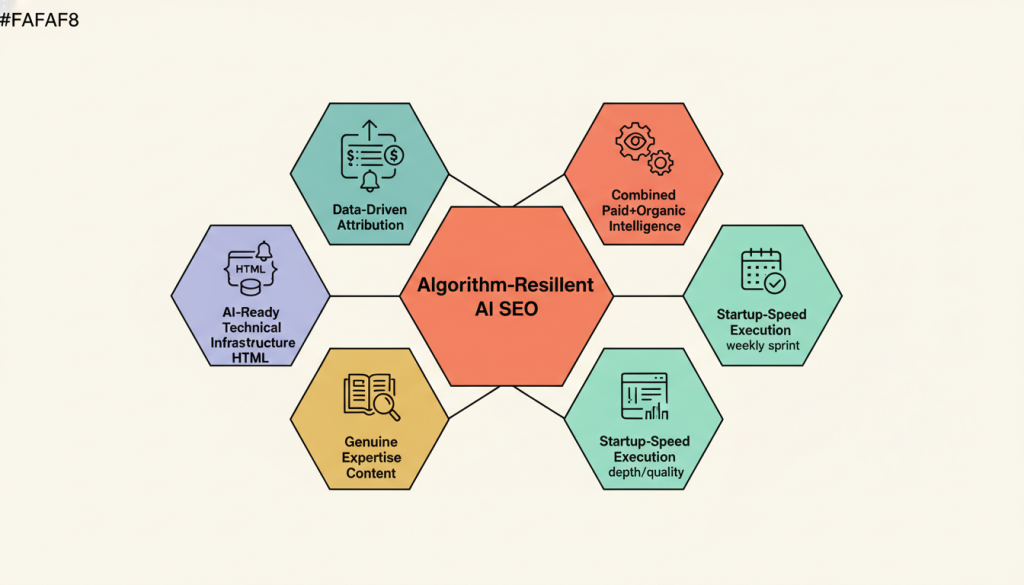
What an Algorithm-Resilient AI SEO Strategy Requires
Data-Driven Attribution Across Every Channel
Stop relying on single-channel metrics. Build attribution models that connect your SEO efforts to revenue, not just rankings. When you understand which content drives actual business outcomes, algorithm fluctuations become noise rather than crises.
Combined Paid and Organic Intelligence
Your paid campaign data reveals exactly which messages convert. Your organic data reveals which topics drive discovery. Siloed teams never connect these insights. A unified approach lets your paid learnings inform organic strategy and vice versa. This integrated methodology is central to ai search optimization that withstands platform shifts.
Startup-Speed Execution Cycles
Enterprise SEO moves in quarterly cycles. Algorithm updates do not wait for your Q3 roadmap. Adopt weekly content sprints, rapid testing frameworks, and streamlined approval processes. Execute faster than the algorithms change.
Content Built on Genuine Expertise
Every major algorithm update in the past five years has rewarded genuine expertise and punished thin content. This trend accelerates with AI. Stop producing content designed to rank. Start producing content designed to educate. The rankings follow.
Technical Infrastructure That Serves AI Crawlers
AI search engines and traditional crawlers have different needs. Ensure your site serves clean, structured HTML with comprehensive schema markup. Implement proper heading hierarchies. Make your content easy for any machine to parse and understand.
Automated Monitoring and Rapid Response
Manual traffic monitoring catches problems too late. Build dashboards that alert you within hours of significant ranking changes. Automate competitive tracking across both Google and AI platforms. Fast detection enables fast response.
Practical Steps to Build Algorithm Resilience
Conduct a vulnerability audit. Identify which pages depend on a single ranking factor or keyword. These pages are most exposed to algorithm changes. Diversify their traffic sources and strengthen their topical authority.
Build topic authority, not page authority. Algorithm updates increasingly evaluate your site’s expertise on a topic level. Create comprehensive content clusters that demonstrate deep knowledge. Link related pieces together. Become the definitive resource for your core topics.
Invest in original data and proprietary insights. Content that contains unique data survives algorithm updates because it cannot be replaced by competitor content. Publish benchmarks, original research, and customer-derived insights that only your organization can produce.
Test your content across AI platforms weekly. Query your target keywords in ChatGPT, Perplexity, and Google AI Overviews every week. Track changes in recommendations and citations. Successful ai search optimization requires monitoring AI platforms with the same discipline as traditional SERP tracking.
Reduce dependency on any single traffic source. Build email subscribers, community members, and direct audience relationships. When the next algorithm update hits, these channels remain stable while your competitors panic.
Standing Still Is the Riskiest Strategy
Every algorithm update separates the brands that built on solid foundations from those that built on tactics. The gap widens each time.
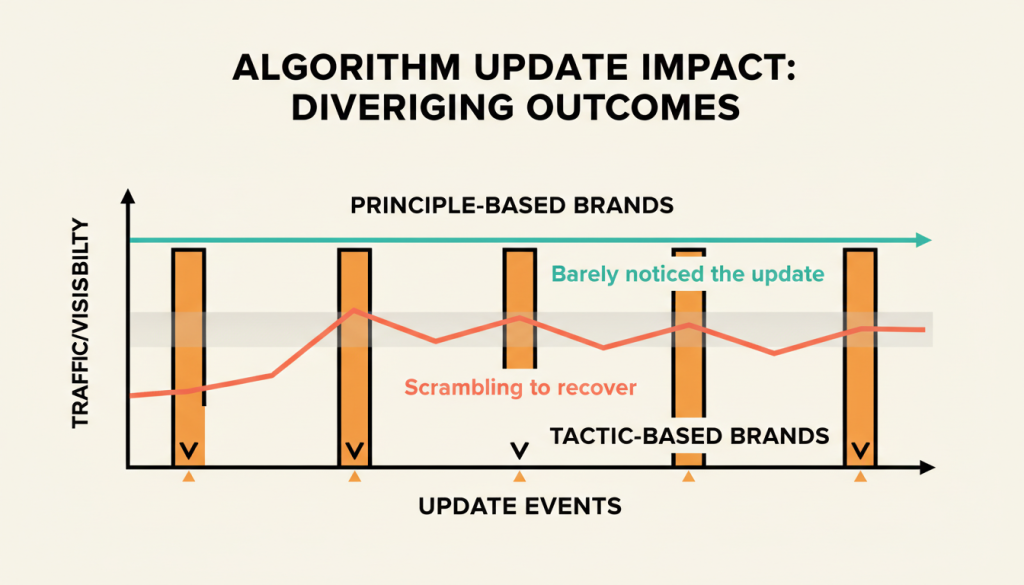
Your competitors who invested in genuine expertise, cross-channel attribution, and AI-native content strategies barely noticed the last update. Their traffic held steady or grew while others declined.
The next update is coming. The one after that will lean even harder on AI-evaluated quality signals. The cost of rebuilding after each update far exceeds the cost of building correctly now.
Choose a strategy that survives not just the next update, but every one that follows.









Comments