
 By
By 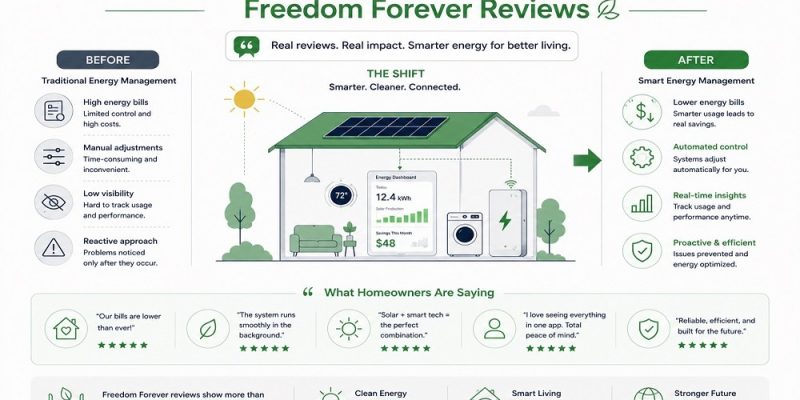
Home energy systems once operated largely in isolation. Solar panels generated power, appliances consumed electricity, and visibility often ended at monthly meter readings. As residential technology has evolved, those boundaries have narrowed. Freedom Forever Solar Reviews reflect this shift as cloud-based platforms increasingly connect solar systems, batteries, and smart home devices into unified environments that support coordinated energy management.
Through cloud technology, energy management extends beyond physical hardware. Software platforms collect and interpret information from across the home, allowing systems to respond to changing conditions with greater awareness. This connected approach enables households to manage energy through shared data rather than individual controls, supporting both efficiency and ease of use.
What Cloud-Based Energy Platforms Do
Cloud-based energy platforms serve as centralized hubs for data and coordination. They gather information from solar panels, inverters, battery storage, and connected devices, then process that information remotely.
By analyzing data over time, these platforms identify patterns in production, usage, and system behavior. Decisions reflect accumulated insight rather than isolated readings. Homes benefit from a broader perspective, where energy management is guided by context instead of moment-to-moment reactions.
Remote Monitoring Expands Visibility
One of the most noticeable changes cloud platforms bring is improved visibility. Homeowners access dashboards and applications that display real-time and historical data. These tools allow users to track energy production, consumption patterns, and system performance in one centralized place. With clearer insights, homeowners can better understand how their habits impact efficiency and costs over time. This level of transparency helps build confidence in the system while encouraging more informed, proactive energy decisions.
Production levels, consumption trends, and storage status appear in clear formats. Families see how energy moves through the home across the day and over longer periods. This visibility supports understanding. Energy becomes something households can observe and learn from, rather than a background service.
Coordination Across Home Systems
Cloud platforms excel at coordination by connecting devices through shared intelligence. Solar generation, battery storage, and household devices operate with awareness of one another. This interconnected approach allows systems to respond dynamically to changing conditions, such as weather shifts or peak demand periods. Energy can be stored, distributed, or consumed more efficiently based on real-time priorities. As a result, homeowners benefit from smoother operation, reduced waste, and greater overall system reliability.
When solar production increases, homeowners can use the cloud dashboard to set rules that charge the battery first or run certain appliances during peak output. When demand rises, the same settings keep priorities clear by preserving energy for essential loads and shifting flexible tasks to a better time. Instead of each device operating on its own, solar, storage, and major loads follow one coordinated set of preferences.
Optimization Through Aggregated Data
Cloud technology supports optimization by analyzing energy data over time. By looking at patterns across days, weeks, and seasons, homeowners can see when solar production is strongest, when demand typically peaks, and where timing changes could improve efficiency.
With that longer view, households can adjust schedules and storage priorities so production and usage stay better aligned. Most changes are gradual and do not disrupt daily routines. Over time, optimization becomes a steady process shaped by real household patterns rather than one time adjustments.
Supporting Ongoing System Improvements
Cloud-based platforms also enable software updates that enhance system behavior over time. Improvements deploy remotely without requiring hardware replacement.
Homes gain access to new features and refinements as software evolves. Energy management improves through insight and iteration rather than physical upgrades. This approach extends system relevance and supports long-term performance.
Visibility Builds Confidence in Software-Led Systems
Trust is essential when systems rely on remote coordination. Visibility supports that trust by showing how and when adjustments occur.
Freedom Forever reviews often highlight communication and access to system information, noting the value of monitoring tools and cloud-based insights that explain system behavior. These observations reflect how transparency supports confidence. Understanding why systems respond as they do helps households feel comfortable relying on software-driven coordination.
Simplifying Energy Management for Homeowners
Energy systems can feel complex because there are so many separate controls. Cloud platforms reduce that friction by putting monitoring and settings in one place and handling much of the coordination in the background.
Instead of bouncing between apps and device menus, homeowners can review performance, adjust settings, and track results from a single dashboard. That consistency makes energy management feel simpler and more practical to use over time.
Scaling as Homes Develop
As households add devices or expand capacity, cloud dashboards make it easier to keep everything organized in one place. Homeowners do not have to manage separate systems with separate controls just because the home adds a battery, new appliances, or additional solar capacity.
When new equipment is added, it shows up within the same monitoring and settings view, so the system remains consistent. That continuity matters over time because households can grow their setup in steps while keeping coordination, visibility, and everyday management simple.
Connecting Homes to Broader Energy Networks
Cloud platforms also support coordination beyond the home. Aggregated data allows households to participate in programs that support broader energy networks.
Platforms manage communication with utilities or network operators while prioritizing household needs. Homes contribute capacity or adjust usage without direct involvement. This connectivity supports larger-scale coordination while keeping home energy management central.
Reliability and Security at the Software Layer
Cloud-based systems rely on secure communication and reliable service. Encrypted data transmission and backup systems protect information and help keep the platform stable, even when connections are inconsistent.
Remote monitoring also supports reliability in practical ways. Homeowners can track performance and receive alerts when something changes, and service teams can often diagnose issues without a site visit. That added oversight helps households feel more confident using cloud-led tools because the system is easier to understand, maintain, and keep running well over time.
Redefining Home Energy Management
Cloud-based energy platforms have reshaped how homes manage energy by connecting devices, data, and decisions. Monitoring improves visibility. Coordination supports balance. Optimization refines performance.
Solar-integrated homes give homeowners clearer visibility into how energy is produced, stored, and used throughout the day. Cloud platforms connect monitoring, storage, and smart devices through shared data, which reduces guesswork and cuts down on separate controls. As expectations for connected homes continue to rise, cloud based coordination supports clearer decisions, smoother operation, and more confident everyday energy use.









Comments