
 By
Key Points:
- Staging new fiber before cutover can significantly reduce outage exposure.
- Equipment compatibility should be checked before production traffic is moved.
- Pre-cutover testing creates a useful performance baseline for troubleshooting.
- Phased migrations can reduce risk across multi-room or complex commercial networks.
- Cutover timing should match business operations and acceptable downtime limits.
- A clear rollback plan helps contain problems when migration does not go smoothly.
- Accurate labeling and documentation make future fiber troubleshooting much faster.
- Practical spare capacity can simplify later expansion without unnecessary overbuilding.
Fiber upgrades are often planned because a commercial network has reached a limit. Maybe bandwidth is tight, older copper links are becoming unreliable, or several telecom rooms need a faster backbone. The technical goal may be clear, but the operational risk is just as important. If the cutover is handled poorly, employees can lose access to phones, cloud applications, security systems, and other tools that the business needs throughout the day.
Reducing downtime starts long before the old connection is disconnected. Teams need to understand live circuits, dependency points, equipment compatibility, pathway access, testing requirements, and the exact order of the cutover. A good modernization plan creates room for verification before traffic is moved. It also gives the business a fallback if something unexpected appears. That planning takes more effort upfront, although it usually costs far less than an avoidable outage during normal operations.
Fiber Installer Review Before Migration Begins
A professional fiber optic installer should begin by mapping the network that is already in service. That includes core switches, telecom rooms, backbone links, internet handoffs, business phones, wireless infrastructure, and any systems that depend on the same pathway. The point is not simply to document equipment. It is to understand which connection affects which department, so the team knows what can be changed safely and what needs a carefully controlled maintenance window.
This review often uncovers dependencies that are easy to miss. A fiber link scheduled for replacement may also support cameras, access control, or a remote office area that was not listed in the original scope. Finding that connection after shutdown is expensive. Finding it during planning is manageable. Commercial teams should therefore confirm circuit labels, port assignments, and critical services before any live link is touched, especially in buildings where infrastructure has changed several times.
Fiber Pathway and Equipment Compatibility Checks
Fiber projects depend heavily on correct pathways, connector types, optics, rack space, and power availability. A route that appears open on drawings may be crowded above the ceiling or blocked at a riser. Likewise, new fiber may reach the equipment room only for the team to discover that the switch requires different transceivers. Those issues are easier to solve before cutover night. A detailed site review helps remove these last-minute surprises from the schedule.
Compatibility checks should include more than the cable itself. Technicians need to confirm switch interfaces, transceiver types, patching, link speeds, and any configuration changes required before traffic moves. A 10-gigabit upgrade, for instance, will not deliver the expected result if one older component in the path still limits the connection. Reviewing the full link keeps the project focused on working performance rather than simply replacing one piece of infrastructure with another.
Fiber Cable Staging Reduces Cutover Exposure
Staged installation can reduce risk because new pathways and equipment are prepared while the current network remains active. A fiber optic cable installer may pull, terminate, label, and test the new fiber before the final migration window begins. That separates most physical work from the actual outage period. When the cutover starts, technicians are moving traffic onto infrastructure that has already been checked rather than building and testing everything while users are waiting.
For example, a business with three telecom rooms might complete the new backbone during normal construction hours, then schedule the traffic migration for Friday evening. Only the active connections are changed during that window. If each room is tested separately, the team can confirm progress in smaller steps instead of moving the whole site at once. The approach takes coordination, but it limits how much of the network is exposed to one cutover mistake.
Fiber Testing Before Production Traffic Moves
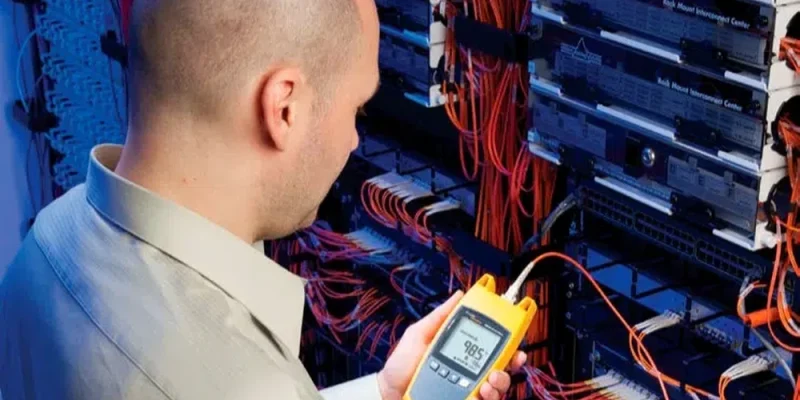
Testing should happen before and after the migration, not only once the project appears complete. A second fiber optic installer checkpoint should confirm continuity, loss levels, labeling, and end-to-end link performance before production traffic is moved. Where appropriate, technicians may use optical power testing or OTDR testing to verify the installed fiber. Pre-cutover results create a baseline, which makes it easier to isolate a fault if something behaves differently after the network goes live.
Post-cutover testing should follow a practical sequence. The team might first confirm the backbone link, then switches, internet access, wireless connectivity, phones, and other business systems. That order keeps troubleshooting focused. If a service fails, technicians know which layer was last confirmed. Without a defined sequence, several people may begin checking different parts of the network at once, creating noise when the faster solution is to trace the change in a controlled order.
Fiber Cutover Planning Needs a Rollback Option
The migration window should match the business rather than the installer’s convenience. Some offices can accept a Friday evening cutover, while hotels, medical facilities, warehouses, or 24-hour operations may need a different approach. Teams should identify the lowest-risk period and define how long the outage is allowed to last. A fiber optic cable installer can then plan staffing, tools, spare materials, and testing around that window instead of assuming there will be unlimited time.
Rollback planning is equally important. If the new path does not perform as expected, the team should know when to stop troubleshooting and restore the previous connection. That decision needs a time threshold and a clear owner. For example, if service is not stable within 45 minutes, the agreed plan may be to return traffic to the original link and investigate offline. A rollback option turns a potential overnight outage into a controlled maintenance event.
Fiber Documentation Supports Future Network Changes
Good labeling and closeout records shorten future outages because technicians can identify the right link without tracing everything again. Fiber strands, patch panels, ports, telecom rooms, and backbone routes should be documented clearly enough for another technician to understand later. That matters during emergency work as well as planned upgrades. A clean record can save an hour of investigation when one link fails, which is a meaningful difference if a department is already offline.
Modernization should also leave realistic room for growth. Spare strands, accessible pathways, and organized rack space can make the next upgrade less disruptive, although overbuilding every route is rarely necessary. The better approach is to prepare where future demand is reasonably predictable. If a company expects another floor to open within twelve months, planning a practical fiber path now may reduce the need to reopen finished spaces or interrupt working network areas again later.
Conclusion
Commercial fiber modernization can be completed with limited disruption when planning, staging, compatibility checks, testing, and rollback procedures are treated as part of the technical design. The safest projects do not depend on everything going perfectly. They create checkpoints, verify new links before traffic moves, and preserve a practical recovery path. That approach gives businesses more control over downtime while improving the network foundation they will depend on after the migration is complete.
CMC Communications supports San Antonio businesses with fiber installation, structured cabling, testing, network infrastructure, and related commercial connectivity services. Their team can review existing links, pathways, equipment requirements, cutover timing, and testing needs before modernization begins. That broader planning can help businesses reduce avoidable service interruptions while moving toward faster and more scalable infrastructure. It also leaves the network easier to document, troubleshoot, and expand when future upgrades become necessary.
Frequently Asked Questions
Question: How can businesses reduce downtime during a fiber upgrade?
Answer: They can prepare new pathways and links before the cutover, test them in advance, schedule migration during a lower-risk period, and keep a documented rollback plan ready if the new connection does not perform as expected.
Question: Why should new fiber be tested before traffic is moved?
Answer: Pre-cutover testing helps confirm that the installed links, connectors, and terminations are working correctly. It also provides baseline results that technicians can compare against if a problem appears after the migration.
Question: Is an after-hours fiber cutover always necessary?
Answer: Not always. The best window depends on business hours, critical services, staffing, and acceptable outage time. Some sites may prefer evenings or weekends, while continuous operations may need phased migration instead.
Question: What should a rollback plan include?
Answer: It should define when the team will stop troubleshooting, who makes that decision, how traffic will return to the previous connection, and which services must be verified before the maintenance window closes.
Question: Why does fiber documentation matter after modernization?
Answer: Clear labels, route records, port details, and test results make later troubleshooting and expansion faster. Technicians can identify the correct links without tracing the entire network again during a future service issue.
| CONTENT CHECKLIST | |
| Total Word Count | 1530 |
| Grammarly Premium Score | 92 |
| Readability Score | 52 |
| Plagiarism | 100% |
| Primary Keyword Usage | 2 times |
| Secondary Keywords Usage | 2 Times |
| Highest Word Density | 1.5 |
| Brand Name Integration | 1 Time |
| Ai Detection Score | 15 |
| Maximum Paragraph Length | 6 Lines |
| FAQs | 5 |










Comments