
 By
By 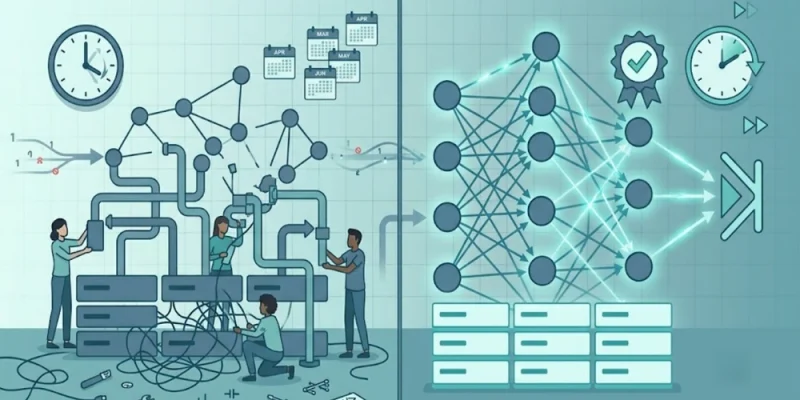
| TL;DR Most models stall at evaluation because the ai training data got scraped in a hurry, checked by no one, and cracked under real load. Models that reach production run on verified, expert-labeled data that holds at the edges. You can buy ai training data shaped to your exact spec faster than your own team can produce it. Humyn Labs builds custom multimodal datasets across voice, image, video, and sensor inputs, each one double checked by domain experts. Want proof before you commit? Ask for a scoped sample and run it against your toughest edge cases first. |
| What training data do AI models need to ship to production? Production models need accurate, edge-case-rich, human-verified ai training data that fits their exact domain, modality, and language. Teams can buy ai training data custom built by verified experts faster than they can label it in house, with multi-layer quality control that keeps the set clean before it ever touches the pipeline. |
Most Models Die in Eval, Not Production
You shipped the build. The demo looked sharp. Then evaluation arrived, and the numbers caved. Sound familiar?
Here is what few teams admit. The model itself was probably fine. The ai training data was the weak link. Noisy labels. Edge cases nobody captured. A set pulled at volume with no real check behind it. That is where projects quietly stall, while the team burns the next two months relabeling instead of launching.
Teams whose models actually reach users treat their machine learning datasets as the product, not a side task. They know clean, verified data decides whether a model ships or rots in a notebook. They also know when to build that data and when to buy ai training data from a team built for it.
This guide breaks down what production-grade data really means, why so much of it fails, the honest math behind build versus buy, and how Humyn Labs builds datasets that survive training.
| The market is telling you something The global AI training dataset market sat around 3.59 billion dollars in 2025 and points toward roughly 4.44 billion in 2026, heading for about 23 billion by 2034 at close to 22.9 percent a year. Image and video data leads today, and multimodal sets are the fastest growing slice of all. Budgets keep shifting toward verified, domain-specific data, because teams learned the hard way that cheap data bills you twice. |
What Production-Grade AI Training Data Actually Means
Set volume aside for a moment. More rows is not the target. The target is data your model can trust. Production-grade means accurate, consistent, rich in edge cases, and fully traceable. Drop any one of those and your model learns the wrong lesson with full confidence.
Accuracy and Consistency Beat Raw Volume
A smaller verified set outperforms a giant noisy one every time. Ten thousand clean, agreed-upon labels teach a model more than a million sloppy ones. Noise does not cancel out. It stacks. The model absorbs the contradictions and grows shakier, not sharper. That is exactly why verified training data pays off.
Edge Cases Are Where Models Break
Your model meets the long tail out in the wild. The blurry scan. The heavy accent. The product shot in poor light. If your labeled datasets only cover the comfortable middle, the model breaks right when the stakes are highest. Strong data chases the edges on purpose.
Provenance and Traceability
You deserve to know where every label came from and who signed off on it. No black boxes. Humyn Labs links each data point to a verified contributor with on-chain reputation, so you get full provenance instead of an anonymous pile. See how that runs on the AI training data solution page.
Why Most AI Training Data Fails Before You Ship
So if production-grade data is the bar, why does so much data miss it? Because bad data rarely warns you. It reads fine in a spreadsheet, then shows up at eval, or worse, in production after launch. These are the failure modes that catch teams off guard.
Scraped at Scale, Verified by Nobody
Volume with no ground truth is the oldest trap going. You end up with millions of rows and zero confidence in any single one. Off-the-shelf sets handle text passably, but multimodal training data across voice, image, video, and sensor barely exists at quality. So teams scrape, and that scrape quietly sets the ceiling on the model.
Crowd-Sourced Labels and the Consistency Problem
Anonymous crowds hand you speed and a consistency headache in the same delivery. Two workers tag the same item three different ways. No peer check, no agreement score, no accountability. Platforms like Appen, Scale, and Toloka built their scale on crowd models, but for specialized domains the cracks show. A radiology label needs someone who reads radiology, not whoever happened to grab the task.
The Hidden Cost of Rework
Now for the math that stings. Say you grab a cheap set of 100,000 labels. Eval flags 12 percent as wrong. You relabel 12,000 items, retrain, and revalidate. That is weeks of engineer time plus a fresh labeling spend, stacked on top of what you already paid. The cheap dataset just turned expensive. You bought it twice.
Build vs Buy AI Training Data, The Real Math
That rework cost raises the real question. When should you build in house, and when should you buy ai training data from a partner? It lands on three things: speed, expertise, and the true cost of standing up a labeling operation.
The True Cost of Building In House
Building looks cheaper until you tally the whole bill. You hire annotators. You buy or build tooling. You stand up QC infrastructure. You manage all of it. Then you wait months for the first usable batch. For a small niche set, that can work. For multimodal data at volume, the in-house cost climbs fast.
When Buying Wins
Buying wins when you need a usable set quickly, when the domain demands real expertise, and when QC has to be built in from the first batch. A focused partner already runs the experts, the tooling, and the quality pipeline. You skip the setup and move straight to data. Here is how the two compare.
| Factor | Build In House | Buy from Humyn Labs |
|---|---|---|
| Time to first usable batch | Months of hiring, tooling, setup | Scoped in 48 hours, delivered in weeks |
| Upfront cost | High fixed cost before any data lands | Pay for the dataset you actually need |
| Quality control | You build the QC layer yourself | Double verified, peer plus central QC |
| Edge-case coverage | Capped by your team’s reach | Verified domain experts by modality |
| Multimodal range | Hard to staff across modalities | Voice, image, video, audio, sensor |
| Scalability | Rehire and retool to grow | Scale through an existing expert network |
Bring this table to your own team. If building wins on every row for your case, build with confidence. If buying wins on the rows that decide whether you ship, talk to Humyn Labs.
What Verified, Human-in-the-Loop Data Looks Like
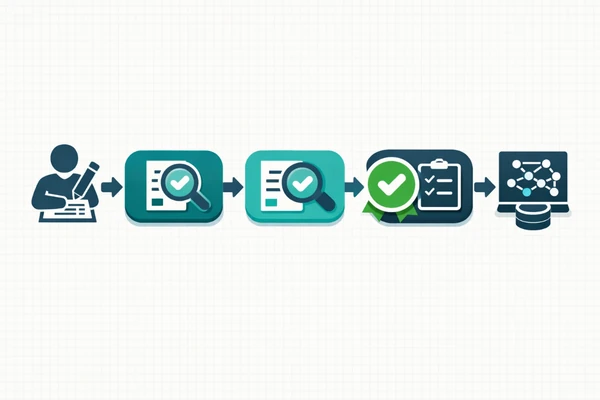
Quality is not a claim on a slide. It is a process you can inspect. Here is the standard Humyn Labs holds to, and why it matters for your model.
Double Verification, Not Spot Checks
Most vendors sample a slice and trust the rest. Humyn Labs runs every data point through two passes: a peer review and a centralized QC check. Spot-checking leaves the remainder to luck. Double verification removes that gamble. That is the gap between data that survives training and data that ambushes you in production.
Inter-Annotator Agreement, In Plain English
Inter-annotator agreement simply measures whether two trained people label the same thing the same way. High agreement means reliable labels. Low agreement means a fuzzy schema or labelers guessing. Ask any vendor for their agreement scores. If they cannot produce one, you have your answer. With human in the loop review, you get the score and the reasoning behind it.
Multimodal Coverage
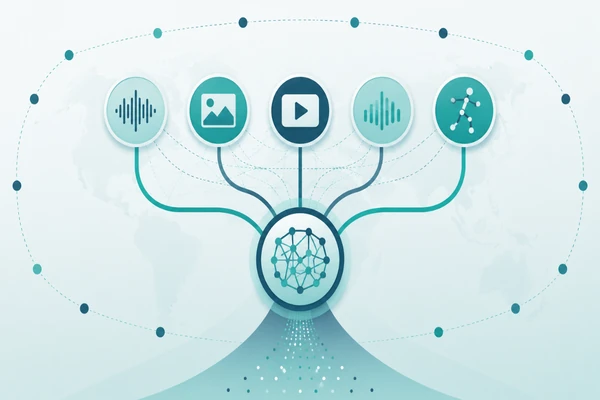
Real production needs far more than text. Humyn Labs builds across voice and speech, image, video, audio, and cross-modal paired sets, video matched to synced transcripts, images carrying captions and bounding boxes, audio tagged with speaker metadata. Coverage runs across 50-plus languages, including Hindi, Tamil, Telugu, and other Indic languages, plus Mandarin, Japanese, Arabic, and the major European ones. Browse sample datasets to see the spread.
How to Vet an AI Training Data Vendor
Picture this. You are training a voice assistant for clinics, and you need accented medical speech across five languages. A vendor quotes you fast and cheap. Before you sign, run this checklist, whether you choose Humyn Labs or anyone else.
Questions to Ask Before You Buy
- What is your QC method, sampling or full double verification?
- Can you share inter-annotator agreement scores?
- Do you offer a sample set before I commit?
- What is your turnaround, and how do you scope it?
- Are contributors verified domain experts or anonymous crowd workers?
Red Flags That Signal Weak Data
Spot-check-only QC. No provenance on where labels came from. No sample on offer. Vague answers about who actually does the labeling. Any single one should slow you down. All four together mean walk away.
What a Sample Set Should Prove
A good sample is not a brochure. It is a test. Throw your hardest edge cases at it and watch whether the labels hold. That one step tells you more than any sales deck ever will. Humyn Labs scopes and samples so you validate quality before you buy at volume.
How Fast You Can Get a Custom Dataset
People assume quality has to be slow. It does not, when the infrastructure already runs.
Scoped in 48 Hours, Delivered in Weeks
Tell Humyn Labs what you are building. They design a custom dataset and scope the project inside 48 hours, then deliver in weeks. Set that against the months an in-house build needs before batch one even appears. The verified experts and QC pipeline already run, so the timeline compresses without trimming quality.
How a Data Partner Compresses the Timeline
The slow part of building is everything before the data: hiring, training, tooling, QC setup. A partner has all of it in place. You move straight to collection and annotation, matched to your domain and modality. That is the core reason buying beats building when speed is on the line.
Common Mistakes to Avoid
Even sharp teams trip on the same few things. Sidestep these and you save weeks.
- Chasing volume over accuracy, then wondering why eval scores stall.
- Skipping the sample test and discovering label problems only after a full buy.
- Accepting spot-check QC as good enough for a production model.
- Ignoring edge cases until the model meets them live.
- Treating data as a one-time purchase instead of an iterative loop you refine.
Frequently Asked Questions
What is AI training data and why does quality matter?
AI training data is the labeled data that teaches machine learning models. Quality drives model performance more than any other single factor. Clean, verified, edge-case-rich data builds models that hold up in production. Noisy data builds models that crumble at evaluation, no matter how strong the architecture.
Is it better to build or buy ai training data?
Build for small one-off niche sets when you already have the experts on hand. Buy when you need multimodal data at volume, fast, with QC built in. Buying skips months of hiring and tooling, and a focused partner ships a usable set in weeks rather than months.
How much does it cost to buy ai training data?
Cost depends on modality, volume, domain complexity, and language. Voice collection prices differently from image annotation or video capture. Humyn Labs scopes each project individually and shares transparent pricing before you commit, so nothing surprises you after delivery.
Can I get a sample dataset before committing?
Yes, and you always should. A sample lets you test the labels against your hardest edge cases before buying at scale. Humyn Labs scopes and samples so you confirm quality first. A vendor that refuses a sample is waving a red flag.
What data modalities does Humyn Labs support?
Voice and speech, image, video, audio, and sensor data, plus cross-modal paired sets like video with synced transcripts and images with captions and bounding boxes. Coverage spans 50-plus languages, including major Indic, Asian, and European ones.
How do you guarantee label accuracy at scale?
Every data point clears double verification, a peer review plus a centralized QC check. Contributors are verified domain experts with tracked on-chain reputation, not anonymous crowd workers. You receive quality metrics and provenance documentation with every delivery.
Ship the Model, Not the Excuses
The model that ships is not the one with the most data. It is the one with the right data, verified, edge-case-rich, traceable. That is the line between a demo that dazzles and a deployment that lasts.
You now know what production-grade ai training data looks like, why most of it fails, and when it pays to buy ai training data rather than build it. The next step is simple.
| Request a verified sample from Humyn Labs. Run it against your hardest edge cases. Then decide with evidence in hand. Your model is only as good as the data behind it, so make that data the part you can stand behind. |











Comments